Body-Safe Toy Materials: Silicone, Glass, Steel, ABS and What to Avoid
As an Amazon Associate we earn from qualifying purchases. Product names below are affiliate links. Adults 18+.

Extra settings are fun, but start with what a toy is made from. Material affects comfort, cleaning and durability long after the novelty of a flashing button wears off. A clearly described material and manageable care routine belong at the top of your shopping list.
What “body-safe” and “non-porous” mean
“Body-safe” should mean suitable for the intended contact with your body. The words alone do not prove that a product has been independently tested or will suit everyone.
Porous materials have tiny spaces that can hold onto bacteria and residue, making them hard to fully clean. Non-porous materials can be cleaned thoroughly, but still need cleaning after every use. Non-porous does not mean automatically sterile.
Materials at a glance
| Material | Feel | Porous? | Cleaning | Things to know |
|---|---|---|---|---|
| Silicone | Smooth; flexible to firm | No, for 100% silicone | Mild soap and water as directed | Check composition; “silicone-like” is not a material specification. |
| Glass (borosilicate) | Hard, smooth, rigid | No | Mild soap and water | Check for chips and cracks before every use; replace damaged pieces. |
| Stainless steel | Hard, smooth, weighty | No | Mild soap and water; dry thoroughly | Confirm stainless steel, rather than unspecified metal or plating. |
| ABS plastic | Hard, smooth, lightweight | No, when intact | Wipe or wash as directed | Electronics and coatings affect care; avoid boiling. |
| Jelly / rubber / PVC / TPE-TPR | Usually soft and flexible | Often; formulations vary | Follow instructions; difficult to fully clean if porous | TPE/TPR vary; jelly and softened PVC may contain phthalates. |
These material categories are a starting point. Follow the complete product’s care instructions, including guidance for coatings and electronics.
Glass and steel can be gently warmed or cooled in water when the maker allows. Avoid extremes and sudden temperature changes; check the temperature before use. Never boil or use a dishwasher unless the toy’s instructions specifically permit it. Only submerge electronic products when their waterproofing instructions allow.
Match the lubricant to the material
Water-based lube is the safe default for toy compatibility. Silicone lube can damage some silicone surfaces, although compatibility varies. Check the toy manufacturer’s guidance first. If silicone lube is permitted, patch test a tiny amount on an inconspicuous area, following the maker’s directions. Stop if the surface changes, swells or becomes gummy; a patch test never overrides a warning against use.
Spot vague or misleading listings
Pause when a listing gives no material, says only “body-safe,” or uses vague phrases such as “premium rubber.” Ask the manufacturer for specifics before buying. A strong chemical smell, unexplained greasy residue or a newly sticky surface deserves attention. These clues cannot identify ingredients, and an odor-free toy is not automatically safe. Skip home flame tests: they cannot establish product safety. Choose clear material information and care instructions instead.
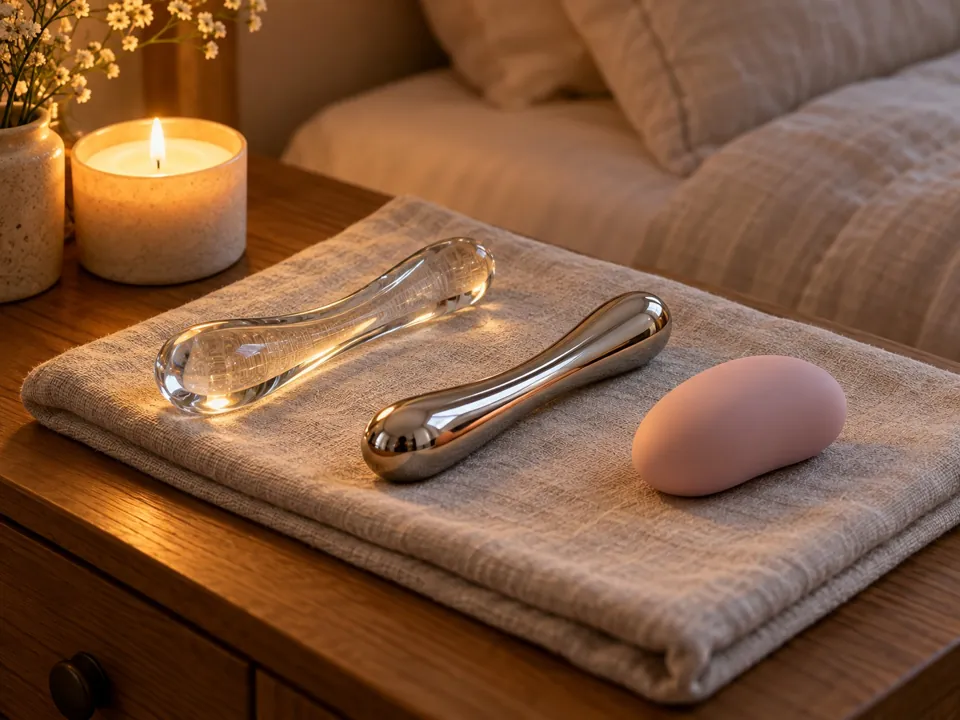
Example picks by material
Check the current listing for materials, seller details and care instructions before ordering.
Silicone: Tantus Silk Small (4.25") comes from a brand known for silicone toys. LELO Mona 2 is a higher-end, silicone-coated vibrator.
Glass: Compare Icicles No. 5 Glass Wand and Crystal Glass Wand. Confirm the specific glass type; “glass” alone does not establish borosilicate.
Stainless steel: Njoy Pure Wand is a heavy, premium option that can last for years with proper care. Consider whether that weight suits your grip.
ABS + silicone: We-Vibe Tango X combines these two materials.
Care: Consider LUBELIFE Water-Based Lubricant (8 oz) and JO Refresh Foaming Toy Cleaner. Follow both products’ directions and the toy’s instructions; cleaner does not make porous materials non-porous.
Material shopping checklist
- Find the exact material, including coatings and mixed components.
- Prefer clearly identified, non-porous surfaces for straightforward cleaning.
- Check manufacturer and seller details.
- Read cleaning and waterproofing instructions before buying.
- Confirm lubricant compatibility.
- Inspect for cracks, chips, peeling or unexplained stickiness.
- Choose a weight, firmness and grip you can comfortably manage.
Bottom line
Start with clear material information and easy maintenance. Silicone, borosilicate glass, stainless steel and ABS are useful options to compare. Pass on mystery materials and unsupported safety promises.
Keep reading
This guide is general information, not medical advice. If you have pain, irritation or a medical condition, check with your doctor first, and always follow the product's care instructions.